How to Help Reduce Dog Urine Spots on Your Grass
If you’re a dog owner, you may have noticed frustrating yellow or brown spots scattered across an otherwise green lawn. A mix of hydration, lawn care, designated potty areas, and simple routine changes may help reduce future damage and support recovery.
Why Does Dog Urine Kill Grass?
Dog urine contains concentrated nitrogen. While nitrogen is actually a nutrient that grass needs in small amounts, the concentration in dog urine is typically too high for the grass to handle. When your dog urinates, the excess nitrogen essentially “burns” the grass, creating those characteristic yellow or brown dead patches.
The Nitrogen Problem
Several factors affect how much damage your dog’s urine causes:
- Diet — Higher protein diets produce more concentrated nitrogen in urine
- Hydration — Less water intake means more concentrated urine
- Grass type — Some grasses are more sensitive to nitrogen than others
- Lawn health — Stressed lawns are more susceptible to damage
- Water and hydration — Water intake can affect how concentrated urine is
A Simple Mineral-Rock Routine
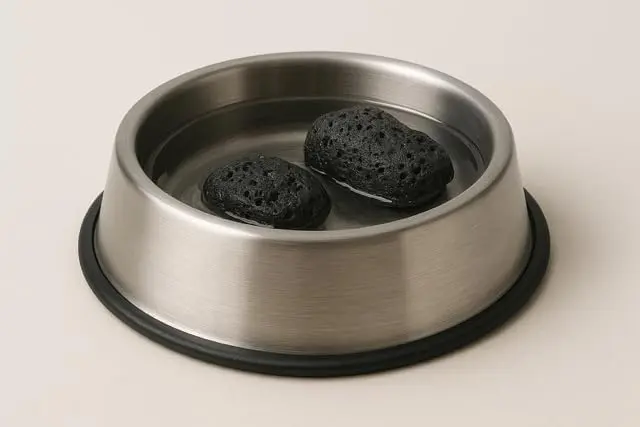
Natural mineral-rock products such as Spot’s Pawty Rocks are designed to be rinsed and placed in a dog’s water bowl as directed. This creates a passive, low-effort step that does not require adding a dietary supplement.
Use the product as one part of a broader routine rather than a guaranteed fix. Outcomes can differ based on the dog, diet, hydration, grass variety, weather, irrigation, and overall lawn health.
How to Use Mineral Rocks
- Rinse the rocks under clean water before first use
- Place them in your dog’s water bowl — that’s it
- Replace as directed on the current product packaging
- Keep the bowl clean with regular washing
Additional Lawn Protection Tips
- Encourage hydration — More water intake dilutes urine naturally
- Train your dog to use a specific area of the yard
- Choose resilient grass — Bermuda and fescue handle urine better than Kentucky bluegrass
- Maintain lawn health — A well-fed, properly watered lawn recovers faster
The Bottom Line
Yellow lawn spots from dog urine are common, and recovery usually benefits from a combination of good hydration, prompt watering, resilient grass, and consistent lawn care. Mineral rocks can be considered as one simple addition to that broader routine; individual results will vary.
Explore a simpler routine
Learn how Spot's Pawty Rocks can fit into everyday bowl care and a broader plan for dog-used lawn areas.